
What I built, and what happened next
- STC Tank Cleaners had no website. I built one around its services, its service area and the questions customers ask before they call.
- I worked on the website and Google Business Profile together, so both say clearly what STC does and where it works.
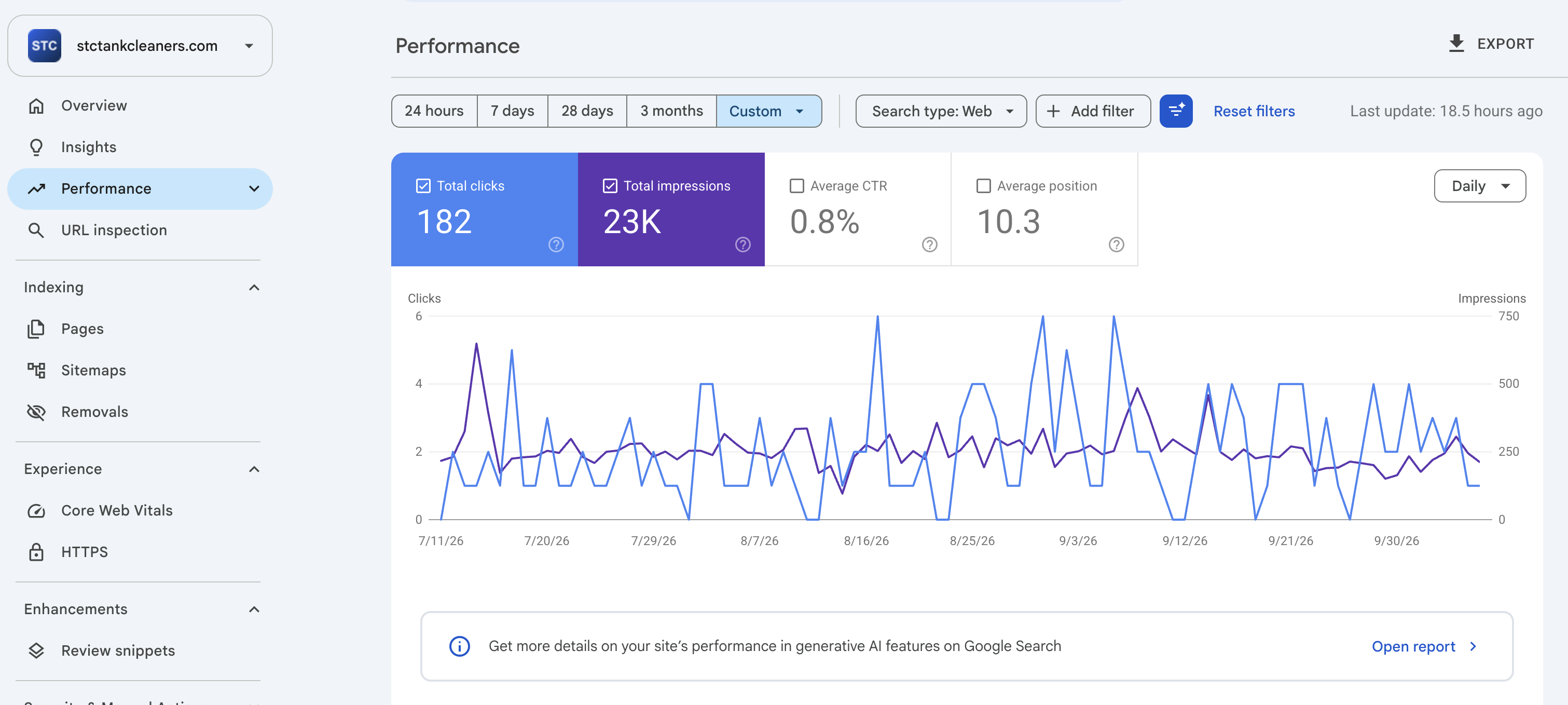
- Within three months, the website had 182 organic search clicks and 23,000 impressions.
- The 9 October 2026 scan for “septic tank services” showed first place across most checked locations. STC also ranks in the top 3 for almost all its other niche keywords.
Where I started: a tank cleaning business with no website
STC Tank Cleaners is based in Berkshire Park and works across Sydney. When I started, it didn't have a website. Nothing for Google to show, nothing for a customer to click. (That's one of the usual answers when someone asks me why their business isn't showing on Google.)
So job one was building somewhere a customer could find the service they needed, check STC covered their area, and get in touch. The SEO went into that build from day one. Bolting it on later is how you end up paying twice.
I worked backwards from the enquiry. Someone needs their septic tank cleaned. What do they search for? What do they need to see when they land on the page? And how fast can they call?
Decide what the website needs to be found for
“Tank cleaning” covers several different jobs. A homeowner after a septic tank pump-out and a business that needs an emergency grease trap clean want completely different information.
So I organised the site around those differences. Septic tank cleaning, sewer pit cleaning, stormwater drains, grease traps and AWTS cleaning each got a clear place on the website.
Location mattered too. STC needed to be found by people in the areas it actually services. That meant explaining the coverage right next to the work. Nobody should have to wonder whether STC will come out to them.
How I built and ranked STC's website
1. Give the homepage a clear job
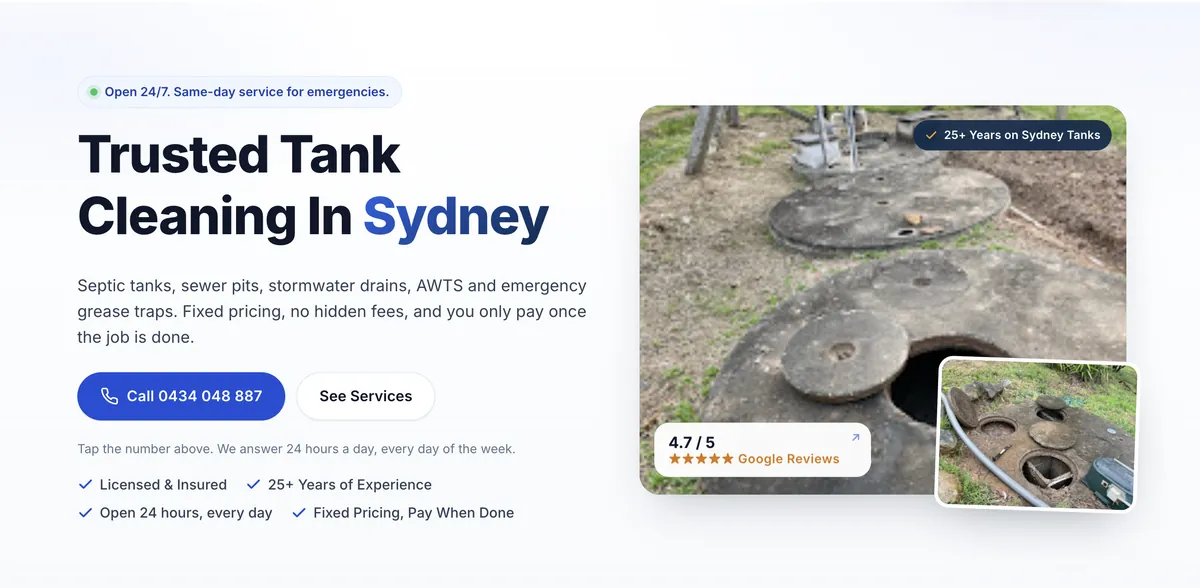
I made septic tank cleaning the main focus of the homepage. The heading tells someone what STC does and where it works. Then the service overview sends them to the right page for their system.
And the phone number is easy to find. In this line of work a customer wants to explain the tank, the access or an urgent problem. They shouldn't have to hunt around the site to start that conversation.
You can see the STC website for yourself. It's the same thinking behind all my web design work: make the service clear, make the next step easy. Pretty comes second.
2. Build a page for each service
Every service got its own page. That way each page answers the questions for that one job and has one specific search to go after.
Take septic tank cleaning. That page has to explain the pump-out and help someone decide whether to call. An AWTS page talks to someone who already knows they've got that type of system. Cram both into one short homepage paragraph and neither job gets done.
I carried the service through the page title, main heading and copy, then used supporting headings so the details are easy to scan. One page, one service, and enough useful information to get someone to the next step.
3. Connect the services to the areas STC covers
I built out the service area information so customers can check STC works near them. Berkshire Park is the base. The business covers the surrounding parts of Sydney too.
The service pages explain the job. The area pages explain the coverage. I linked them together so someone can move between the two without going back to the homepage and starting again.
That gives the site a sensible shape as well. A service page links to the places it's available. An area page points people to the services they can book.
4. Make the Google Business Profile support the website
I worked on the profile alongside the site. The business details, service information and categories had to describe the same business a customer finds when they click through.
Clear services. Consistent information. The website gives someone room to read about the work. The profile gives them a quick way to find the business locally and make contact.
Both lead a customer to the same answer: STC does this job, covers this area, and you can ring them right now.
5. Answer the questions that come before an enquiry
I built the content around what someone needs to know before calling: the services, the systems STC works on, the coverage, and what happens next.
Short answers and clear headings suit someone comparing businesses on their phone. They also make each page's subject obvious. Nobody should read three paragraphs just to work out whether they've found the right service.
Here's the thing. A ranking only gets someone to the page. The page still has to get them to pick up the phone.
What that work produced in three months
From no website, STC reached 182 organic search clicks within three months. The site also recorded 23,000 search impressions.
The part I care about: the website was being found. STC finally had pages people could discover, read and click through to when they needed a tank cleaned.
Check the rankings across the area
I checked local visibility across the area with a ranking scan. Searching from one spot only tells you what someone standing in that spot sees. A grid shows how the business turns up from lots of locations at once.
The scan on 9 October 2026 was for “septic tank services”. STC ranked first at most checked locations, with second place at the remaining visible points.
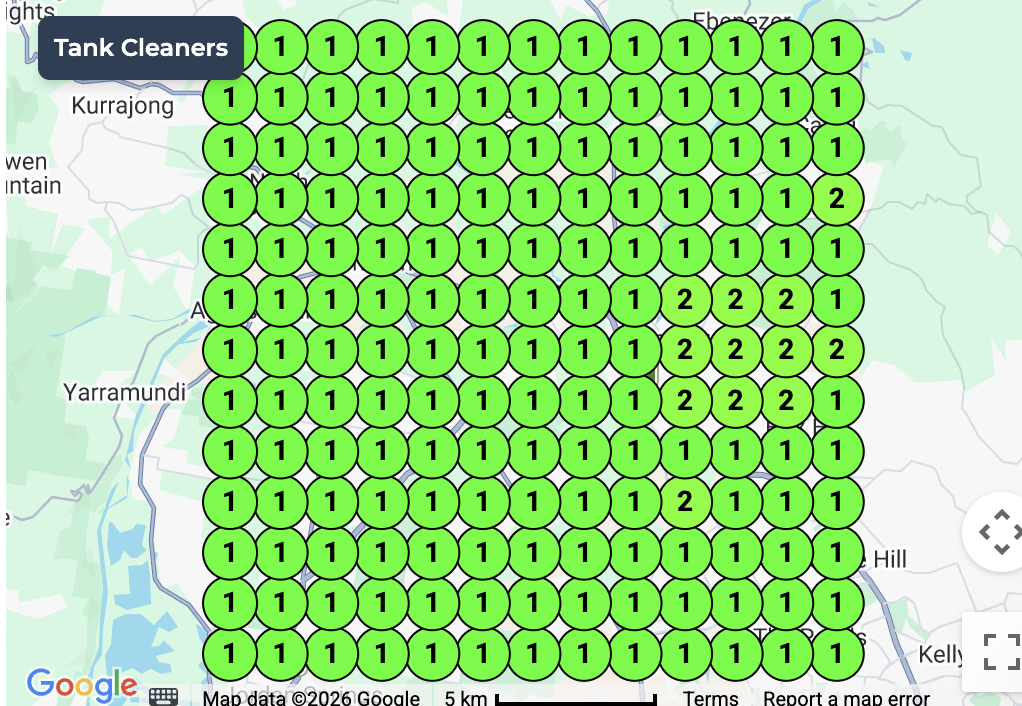
STC also ranks in the top 3 for almost all the other keywords related to its niche. The scan above shows one of those searches. The wider rankings mean customers find STC whichever way they phrase the job.
How the pieces work together
The website build, the on-page SEO and the profile work all pulled in one direction: get the right customer to STC and make the next step obvious.
- The homepage introduces the business. Main service and location, front and centre.
- Service pages go into the detail. Each job has a page that answers the questions people ask about that job and no other.
- Area pages explain the coverage. Customers can check whether STC works near them.
- Internal links connect the information. Someone can move from their area to the service they need.
- The profile backs up local visibility. One more way to find and contact the same business.
So STC has a foundation it can keep building on. The business now has a website bringing in search traffic, first-place visibility across most of the scanned area for “septic tank services”, and top-three rankings across almost all its other niche keywords.
Where I'd start with your business
No website yet? I'd start by working out which services you want more enquiries for and build around them. Wondering what that sets you back? I've broken down what a tradie website costs, with STC as one of the examples. Already got one? I'd check whether those services have useful pages, whether your coverage is clear, and whether it's easy to contact you. Plenty of sites fall over on at least one of those.
That's also how I approached Design Timber Flooring. Its website now shows 123 search clicks and 26 submitted quote forms over three months. Same rule every time: start with the business and the jobs it wants more of.
Read more about my local SEO service, or let me show you where I'd start with yours.